
About Patch Math
I envision a world where students stop mistaking struggle for incapability.
A world where mathematics is no longer used as proof of who does or does not belong, but as a way to understand patterns, systems, relationships, and ourselves.
At Patch Math, I help students see what is actually happening:
The structure of the mathematics.
The structure of their thinking.
And the conditions shaping what they can access.
Because when students can finally see the learning system clearly, something shifts.
Confusion becomes traceable. Mistakes become useful. And confidence stops being something students perform and starts becoming something real.
Learning does not happen in isolation.
Mathematical understanding is connected to emotion, prior instruction, cognitive load, accessibility, the nervous system, and the messages students absorb about intelligence and ability.
Change the conditions around learning, and what becomes possible changes too.
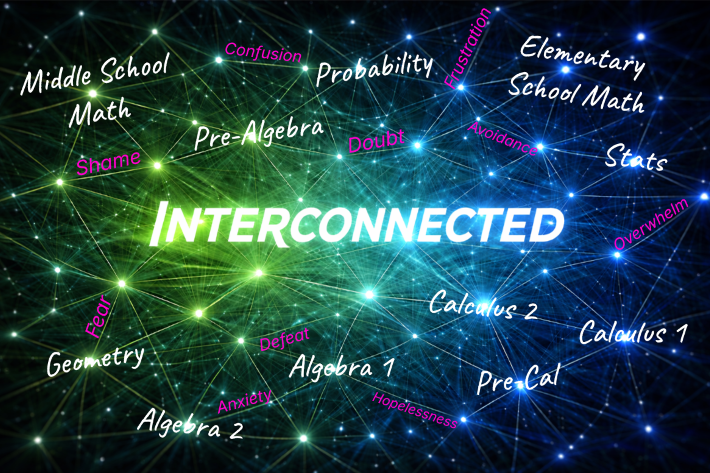
Changing this…
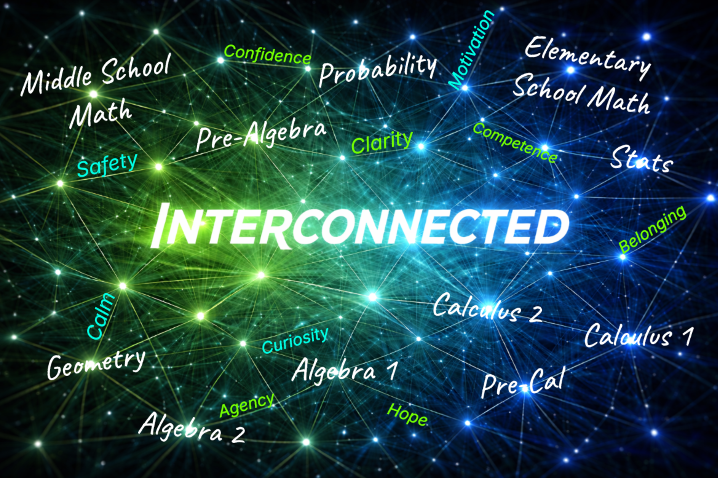
to this.
I want students to recognize that what looked like inability was often a response to conditions that made understanding harder to reach.
I want them to stop mistaking a broken learning system for a broken self.
I want students to leave with more than stronger math skills.
I want them to know:
How to think critically.
How to work through complexity.
How to identify where they are stuck without collapsing into self-doubt.
How to rebuild understanding with clarity and self-trust.
How to recognize when the conditions around them are shaping what they can access.
Kayla’s Core Values:
I believe students are capable of rigorous, high-level thinking when learning barriers are identified clearly and the right support structures are in place.
High standards with accurate support
Accessibility and true equity as the baseline, not the exception
I believe students should not have to earn the right to accessible, human-centered education that recognizes the real systems shaping their ability to learn.
I believe mistakes are some of the most valuable tools in learning because they reveal where understanding stopped holding and where rebuilding needs to begin.
Mistakes treated as useful information
Helping students see the interconnected systems shaping learning and their place within them
I believe students learn more effectively when they can clearly see the connections between mathematics, emotion, identity, prior experiences, social systems, and the way they experience learning itself.
My goal is bigger than better math outcomes.
I want students to understand the interconnectedness of the world and their place within it.
Questions? Tell me what is going on, and we will figure out where to start.